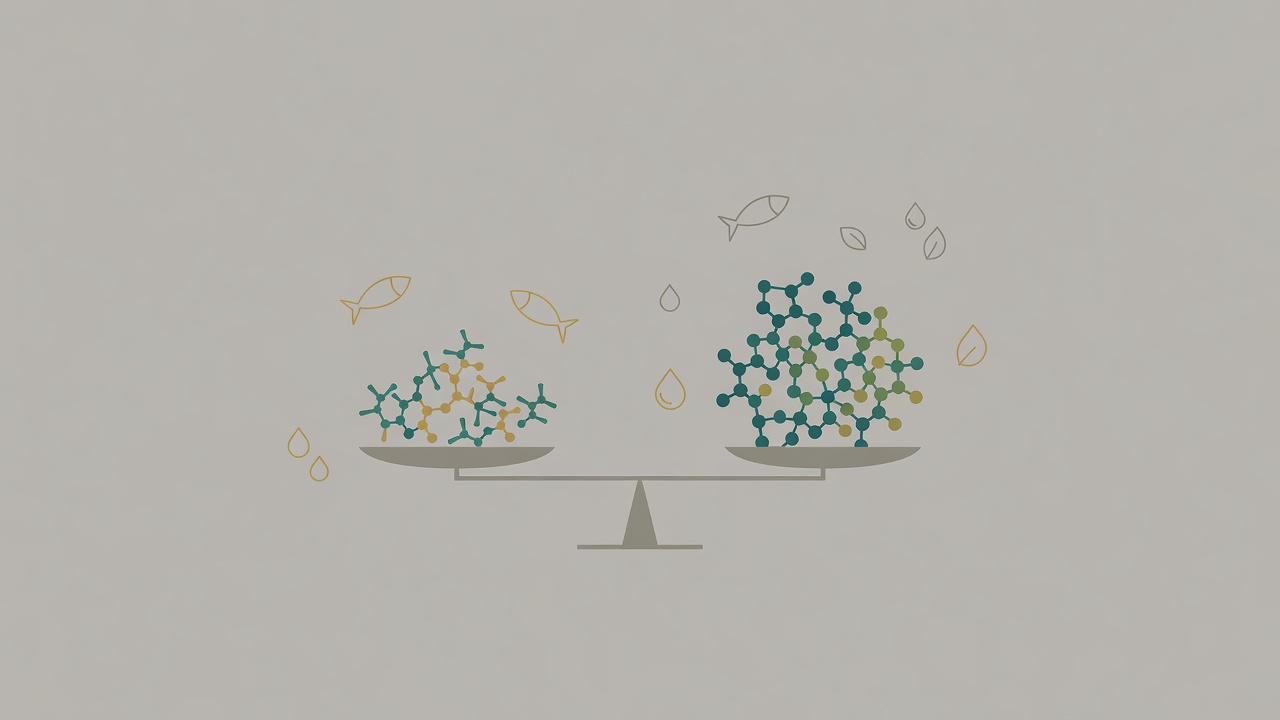
For decades, omega-3 supplementation trials have disappointed clinicians hoping to protect aging brains, yielding modest or null results. This large-scale analysis reframes the question entirely: it may not be how much omega-3 you consume, but how far out of balance your omega-6 intake has pushed the ratio — a distinction with profound implications for dietary strategy in dementia prevention.
Drawing on two substantial cohorts — the AgeCoDe study (n = 3,327) and the MAPT trial (n = 1,679) — researchers modeled how individual polyunsaturated fatty acids versus their ratio predicted progression to Alzheimer's-type dementia and rate of cognitive decline. Cox proportional hazard and linear mixed models consistently showed that a high omega-6-to-omega-3 ratio at baseline conferred greater dementia risk than low omega-3 levels alone. Critically, individuals whose ratio improved longitudinally demonstrated measurably slower cognitive decline, suggesting a dynamic, modifiable relationship. Mendelian randomization analysis indicated the association is likely not genetically causal, pointing toward genuine dietary causation while leaving residual confounding possible. A mechanistically important secondary finding: higher omega-3 levels were associated with reduced circulating omega-6 species, implying competitive metabolic suppression between the two fatty acid families.
This work challenges the supplement-first paradigm. Western diets now carry omega-6-to-omega-3 ratios estimated between 15:1 and 20:1 — far above the evolutionary norm of roughly 4:1 — driven by seed oil consumption and declining oily fish intake. The implication here is that reducing omega-6 load (processed foods, refined vegetable oils) may be as important as increasing omega-3 intake, a dual-lever approach most supplementation trials ignore entirely. The observational nature of the cohort data and the non-causal Mendelian randomization signal urge caution against strong mechanistic conclusions, and dietary self-report limitations apply. Still, the convergence of two large independent datasets makes this finding more than incremental — it could meaningfully reshape nutritional guidance for cognitive aging.