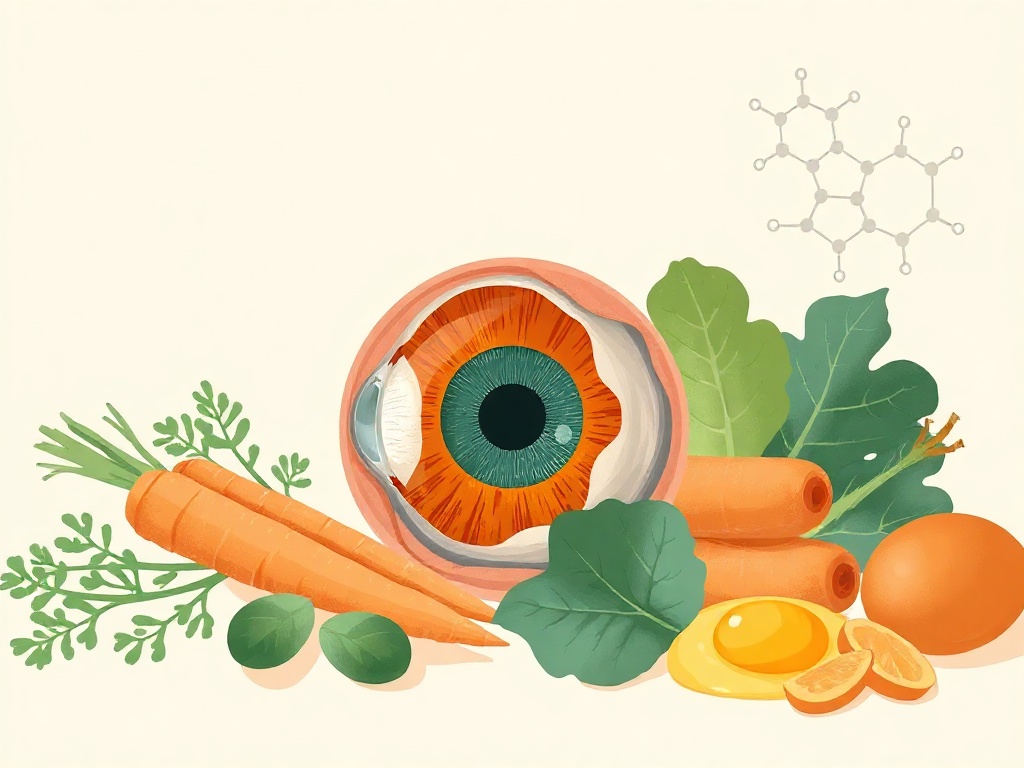
For decades, clinicians have puzzled over why two patients carrying identical mutations in the same gene can present with vastly different clinical outcomes — one with near-normal vision, another with severe congenital blindness. New research in PNAS offers a compelling answer for Matthew-Wood syndrome: the mother's vitamin A nutritional status during pregnancy may function as a molecular dimmer switch on the severity of the child's eye malformations.
The study centers on STRA6, the primary cellular receptor responsible for importing retinol (vitamin A) into tissues from retinol-binding protein in the bloodstream. Mutations in STRA6 cause Matthew-Wood syndrome, a rare congenital disorder characterized by anophthalmia or microphthalmia — absent or severely underdeveloped eyes — as well as cardiac and pulmonary defects. Using genetic mouse models carrying STRA6 loss-of-function mutations, investigators demonstrated that varying maternal dietary vitamin A intake directly modulated the penetrance and severity of ocular malformations in offspring. Critically, the same genotype produced dramatically different phenotypic outcomes depending on how much retinol was available in the maternal environment during gestation, linking nutritional exposure to variable expressivity at a mechanistic level.
This finding has meaningful implications beyond a single rare syndrome. Variable expressivity — where identical mutations produce different disease severity — is a long-standing unsolved problem in medical genetics. Nutritional environment as a phenotypic modifier has been theorized but rarely demonstrated this cleanly in a developmental context. The retinoid signaling pathway is fundamental to eye, heart, and limb morphogenesis, so the principle may extend to other congenital conditions shaped by this pathway. Key limitations include the reliance on animal models, meaning direct extrapolation to human prenatal nutrition requires further clinical validation. Still, this research is potentially paradigm-shifting for genetic counseling: it suggests that in STRA6-carrier pregnancies, maternal nutritional optimization could theoretically influence disease severity — a rare, actionable intersection of epigenetics, nutrition, and developmental medicine.