For women thinking about reproductive longevity and menopause timing, the question of whether lifestyle choices can meaningfully shift the biological clock has long lacked a molecular answer. This large-scale study provides one — and it points directly to a hormone most people associate with metabolic health, not ovarian function.
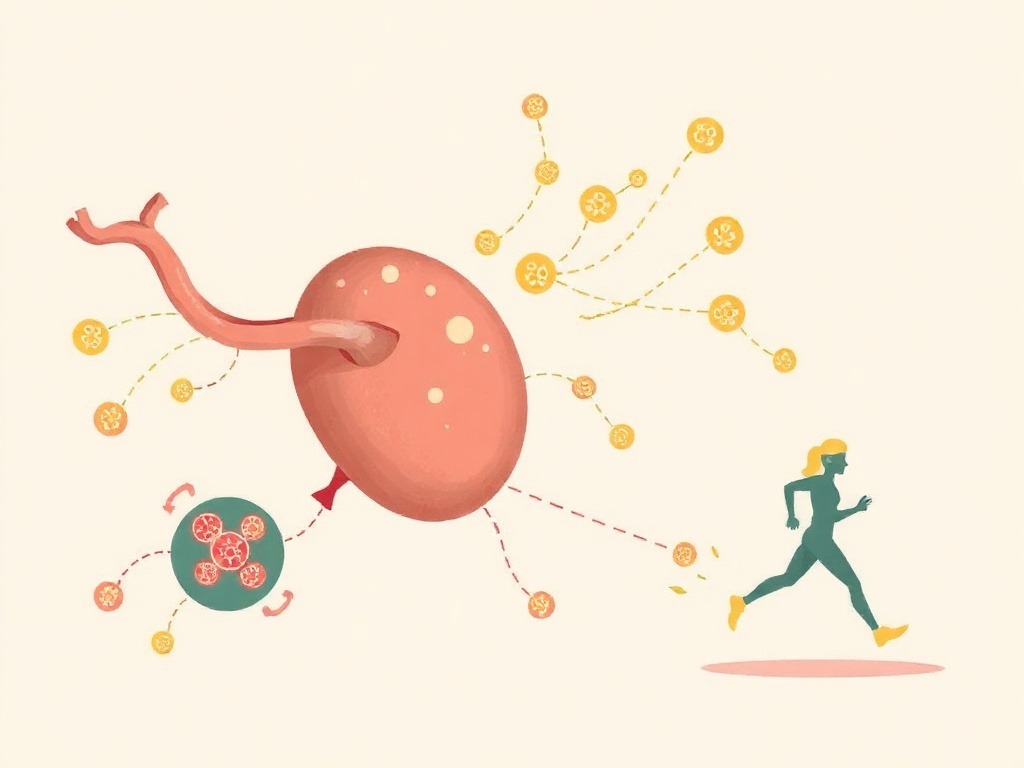
Drawing on cross-sectional data from more than 150,000 participants, researchers identified a statistically meaningful association between higher habitual physical activity and later menopause onset. To probe the underlying mechanism, they turned to mouse models, where exercise-induced delays in ovarian aging were experimentally confirmed — and then specifically dismantled. When adiponectin, an anti-inflammatory adipokine primarily secreted by fat tissue, was genetically knocked out in mice, the protective effect of physical activity on ovarian aging was substantially attenuated. This positions adiponectin not merely as a correlate but as a functional mediator in the exercise-ovarian aging pathway.
This finding is worth examining carefully in context. Menopause timing carries well-documented longevity implications: earlier natural menopause is associated with increased cardiovascular risk, reduced bone density, and shorter overall lifespan, while later menopause correlates with better cardiometabolic profiles in many cohorts. The identification of adiponectin as a molecular target opens a potentially novel pharmacological avenue alongside behavioral ones. Adiponectin levels are known to rise with aerobic exercise and caloric moderation, which partially explains why active women in observational studies tend toward later menopause — though confounding remains a persistent challenge in cross-sectional designs. The mouse knockout data meaningfully strengthens the causal case, yet rodent ovarian biology differs from human reproductive aging in important ways. Replication in longitudinal human cohorts with biomarker data will be essential before adiponectin-targeted interventions can be responsibly evaluated. For now, this qualifies as a potentially paradigm-shifting mechanistic bridge between exercise science and reproductive longevity.