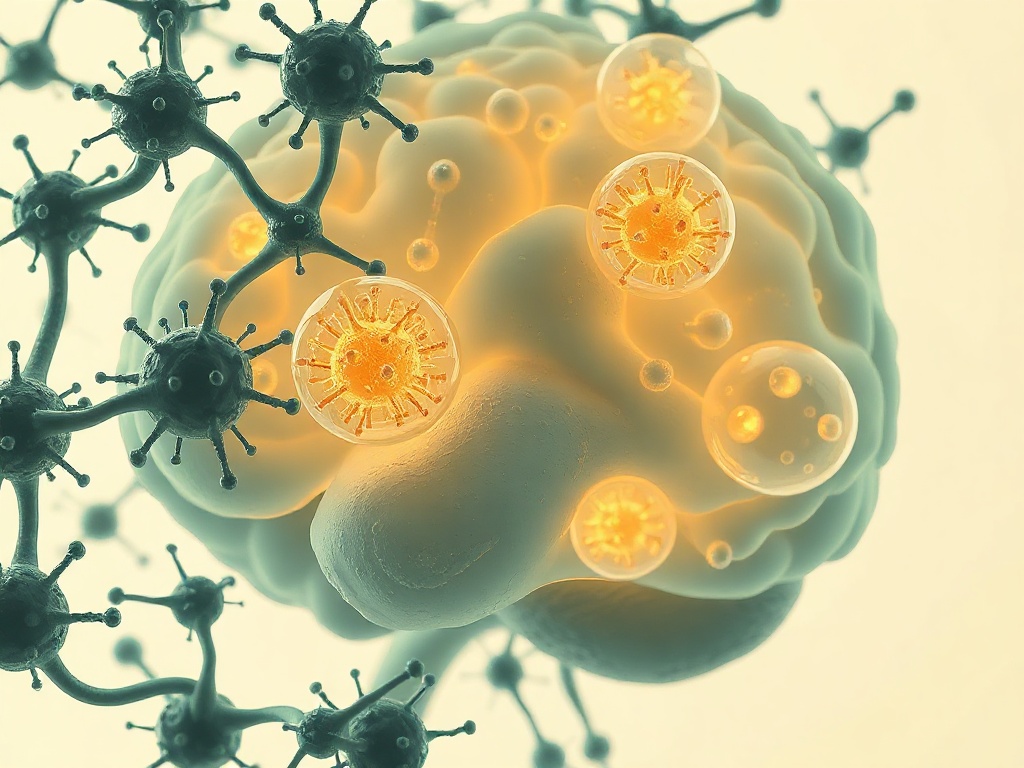
The immune cells of the aging brain may hold a key to understanding why age is the dominant risk factor for neurodegeneration — and a circulating protein already associated with cognitive youthfulness appears to be a meaningful regulator of their decline. For adults concerned about long-term brain health, this represents a mechanistic step forward in understanding how systemic aging signals shape neuroinflammation at the cellular level.
TIMP2 (tissue inhibitor of metalloproteinases 2), previously identified as a youth-associated plasma factor capable of enhancing synaptic plasticity via extracellular matrix remodeling, was shown here to directly govern the behavior of microglia — the brain's resident immune cells. In mice lacking TIMP2, microglia exhibited transcriptomic signatures of accelerated aging: heightened inflammatory activation, elevated lysosomal marker expression, and impaired phagocytosis. In vivo microdialysis revealed increased stress and inflammatory proteins in the brain's extracellular space. Critically, targeted deletion of TIMP2 in specific cellular pools elevated microglial CD68, a marker of activated phagolysosomes, and disrupted myelin clearance. Conversely, exogenous TIMP2 administration in aged mice reduced microglial activation states, diminished the proportion of proinflammatory microglia, and restored phagocytic capacity for physiological substrates.
This work builds on the landmark heterochronic parabiosis literature, where exposure to young blood improved cognition in aged animals. TIMP2 was previously fingered as one active constituent in that rejuvenation effect, but its glial biology was largely unexplored. Positioning it as a microglial regulator adds considerable depth, given that dysfunctional microglia — sometimes called "disease-associated microglia" — are now considered central drivers in Alzheimer's, Parkinson's, and ALS pathology. The study's chief limitations are its exclusively murine scope and the absence of dose-response pharmacokinetics relevant to therapeutic translation. Whether systemic TIMP2 administration can cross the blood-brain barrier sufficiently in humans, or whether it must be delivered centrally, remains unresolved. Still, the bidirectional genetic and pharmacological evidence here is unusually clean for a preclinical aging study, making this an incrementally significant and potentially translatable finding worth tracking.