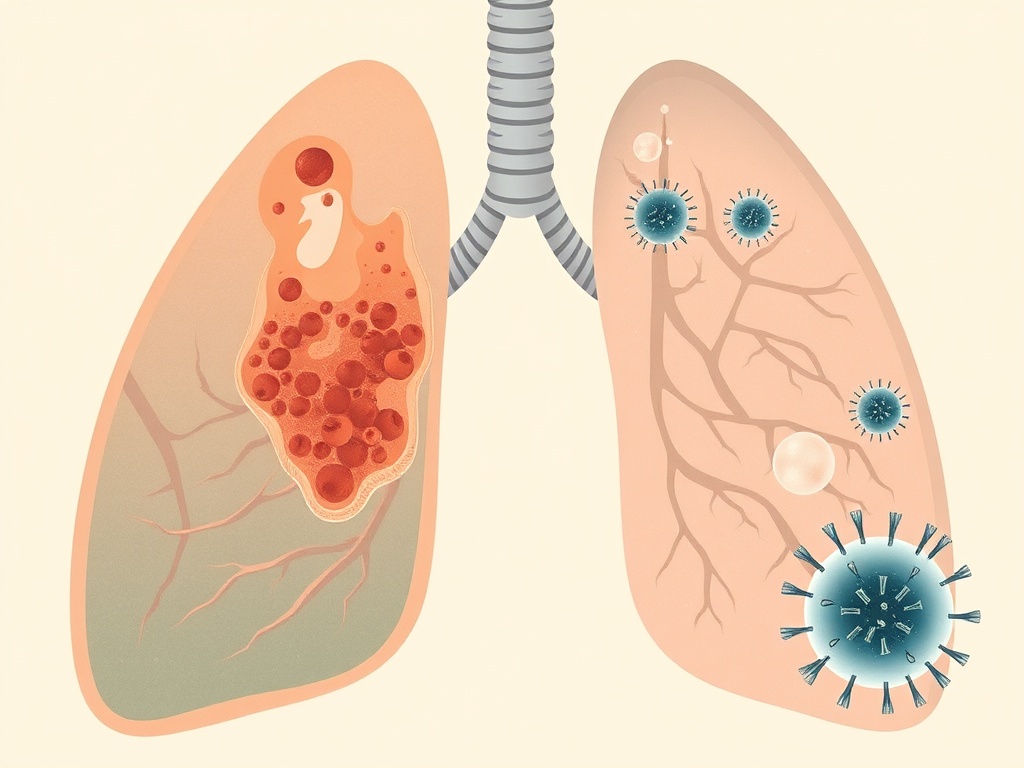
For the millions living with idiopathic pulmonary fibrosis — a progressive, largely untreatable scarring disease with a median survival of three to five years — the possibility of actual fibrosis reversal rather than mere slowing has seemed remote. This research reframes IPF not simply as a fibroblast problem but as a failure of immune surveillance, opening a fundamentally different therapeutic avenue.
The investigation used single-cell RNA sequencing and spectral flow cytometry to identify NKG2A as the dominant inhibitory checkpoint receptor on exhausted natural killer cells in fibrotic lung tissue. The mechanism proved precise: senescent HAS1+ fibroblasts strategically express HLA-E, a high-affinity ligand that engages NKG2A and effectively cloaks those cells from NK-mediated killing. Spatial transcriptomics confirmed these HLA-E-expressing fibroblasts occupy the outer rim of fibroblast foci, directly adjacent to NKG2A+ NK cells — an anatomically defined immune-privileged niche. The myofibroblast core of fibrotic foci, by contrast, largely lacks HLA-E. Critically, blocking NKG2A in vivo restored NK function and drove fibrosis resolution in bleomycin-treated mice, while monalizumab, an existing clinical-grade NKG2A antibody, reactivated patient-derived NK cells and enhanced lysis of human senescent fibroblasts ex vivo.
This work converges two of the most active fields in biomedical research — senescence clearance and checkpoint immunotherapy — in an organ where both have been underexplored. The HLA-E/NKG2A axis is already targeted by monalizumab in oncology trials, which dramatically shortens the translational path compared with de novo drug development. The spatial precision of the finding — immune evasion localized to the fibrotic periphery — also helps explain why systemic immune activation hasn't historically resolved IPF. Key limitations include reliance on the bleomycin mouse model, which incompletely recapitulates human IPF chronicity, and the absence of clinical efficacy data in patients. This is nonetheless a potentially paradigm-shifting mechanistic study that redefines senescent fibroblasts as active immune evaders rather than passive bystanders.