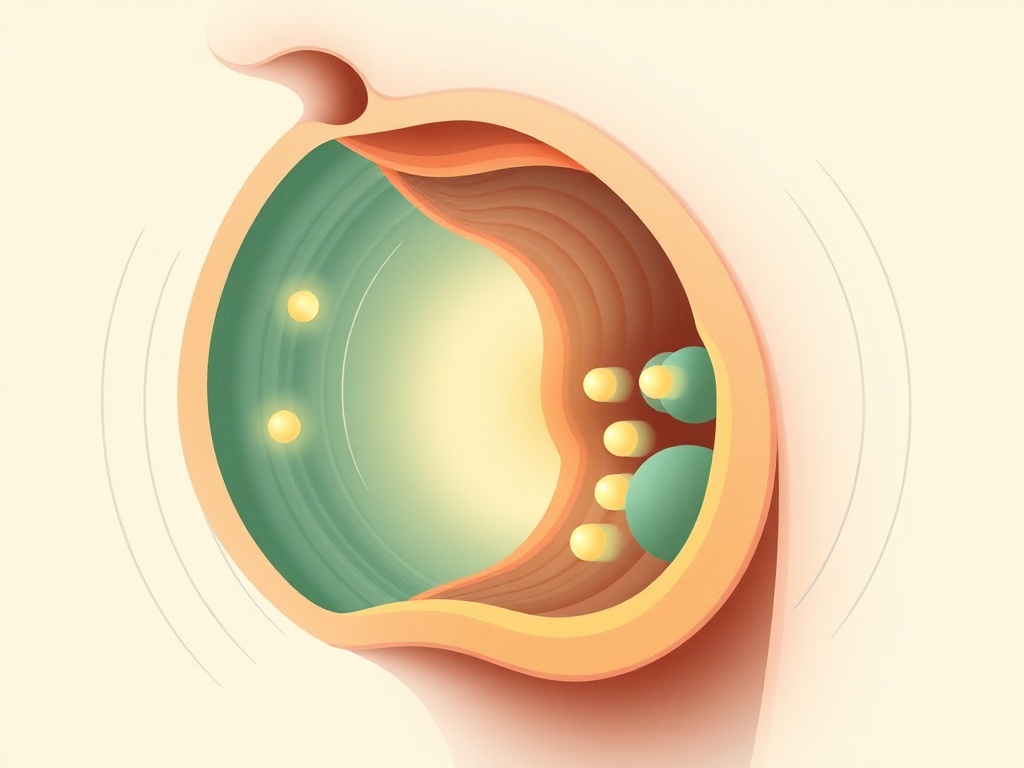
Most people treat snoring as a nuisance rather than a biological stressor, but emerging mechanobiology research suggests the physical vibrations produced during snoring may directly damage the muscle tissue responsible for keeping airways open — potentially creating a self-reinforcing cycle that worsens obstructive sleep apnea over time.
Using an in vitro vibration model applied to L6 rat myoblasts at intervals up to 48 hours, researchers mapped how snoring-frequency mechanical stress remodels the mitochondrial proteome. Within just 8 hours of vibration exposure, oxidative phosphorylation pathways, mitochondrial protein import machinery, and ribosome biogenesis were already disrupted. Specific respiratory chain subunits showed increased abundance — notably NDUFS4 (Complex I), COX5A (Complex IV), and ATP5PD (Complex V) — suggesting a compensatory upregulation attempt. Yet simultaneously, spliceosome-associated factors SRSF2 and DDX46 were reduced, and unspliced pre-mRNA accumulated, indicating that RNA processing bottlenecks were preventing the cell from actually translating that transcriptional upregulation into functional proteins. A mechanosensing-mechanotransduction axis was also activated early, involving integrin subunits and mechanosensitive ion channels, followed by transient focal adhesion signaling.
This work sits at an underexplored intersection of sleep medicine and mechanobiology. Prior OSA research has focused heavily on intermittent hypoxia as the primary tissue-damaging mechanism, but the finding that vibration alone — independent of oxygen deprivation — can fragment mitochondrial homeostasis adds meaningful complexity. For health-conscious adults, the practical implication is sobering: habitual snoring, even without diagnosed apnea, may progressively weaken pharyngeal muscles through cumulative mitochondrial injury, lowering the threshold for airway collapse. Key limitations include the cell-culture setting (L6 myoblasts lack the architectural complexity of intact upper airway muscle), and the rat cell lineage requires human validation. The proteomic-transcriptomic correlation with actual OSA patient tissue is a notable methodological strength that elevates this beyond a purely mechanistic cell study. Overall, this represents an incremental but mechanistically novel contribution that could reframe snoring as an independent therapeutic target.